

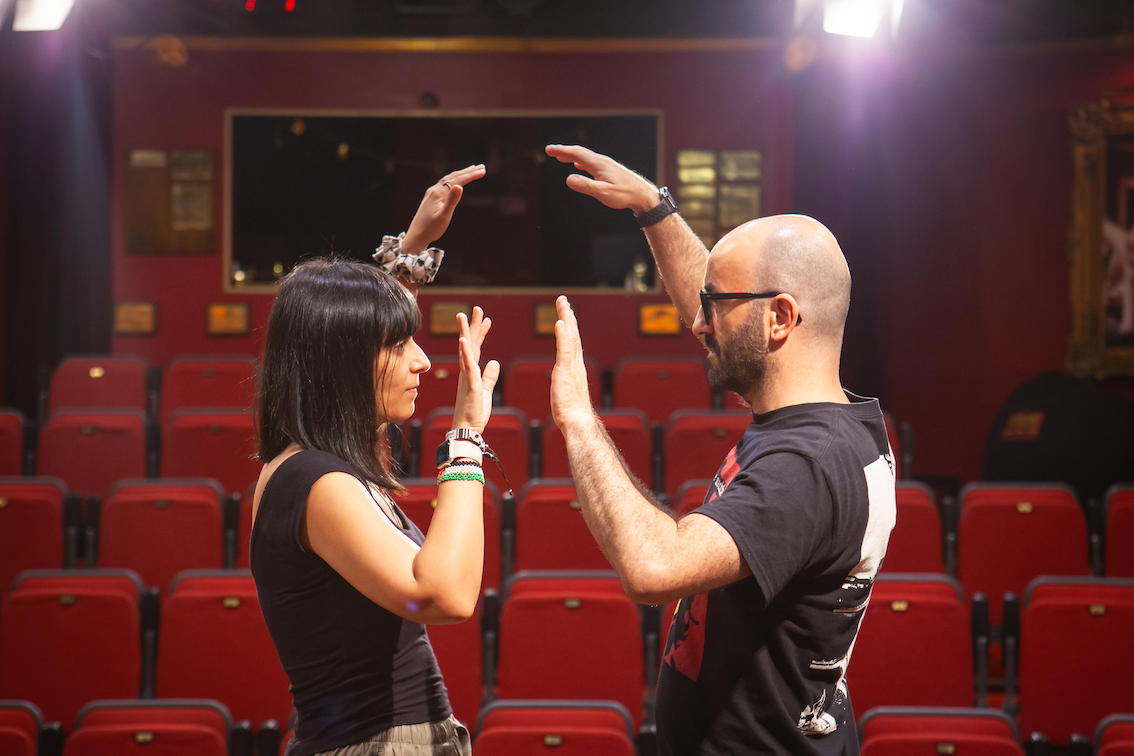
Learning to listen, lift others, and let go of the spotlight.
The world we live in today often rewards the loudest voice in the room. Social media platforms are structured around visibility, algorithms favour outrage, and cultural narratives increasingly centre around the self—the personal brand, the hero’s journey, the individual triumph. In the midst of this, a quiet but radical idea emerges: what if we stopped trying to be the main character all the time?
This is the quiet power of improvisation—not just as a performance tool, but as a social practice. It invites us to shift from ego to ensemble, from self-interest to collaboration, and from individual success to shared discovery.
Rooted in attentiveness, generosity and play, improv challenges the assumption that power lies in control or charisma. It says: let go. Pay attention. Make others look good. In a time of deep division and rampant self-promotion, improv offers something profoundly countercultural—an ethic of care.
One of the most influential thinkers in this space, Keith Johnstone, didn’t teach improv so people could be clever. He taught it so people could be free—free from self-censorship, free from fear of failure, and crucially, free from the relentless need to perform the self.
“You can’t be clever. You can’t make jokes. You must listen. You must respond. And the audience must believe you’re interested.”
– Keith Johnstone, Impro for Storytellers
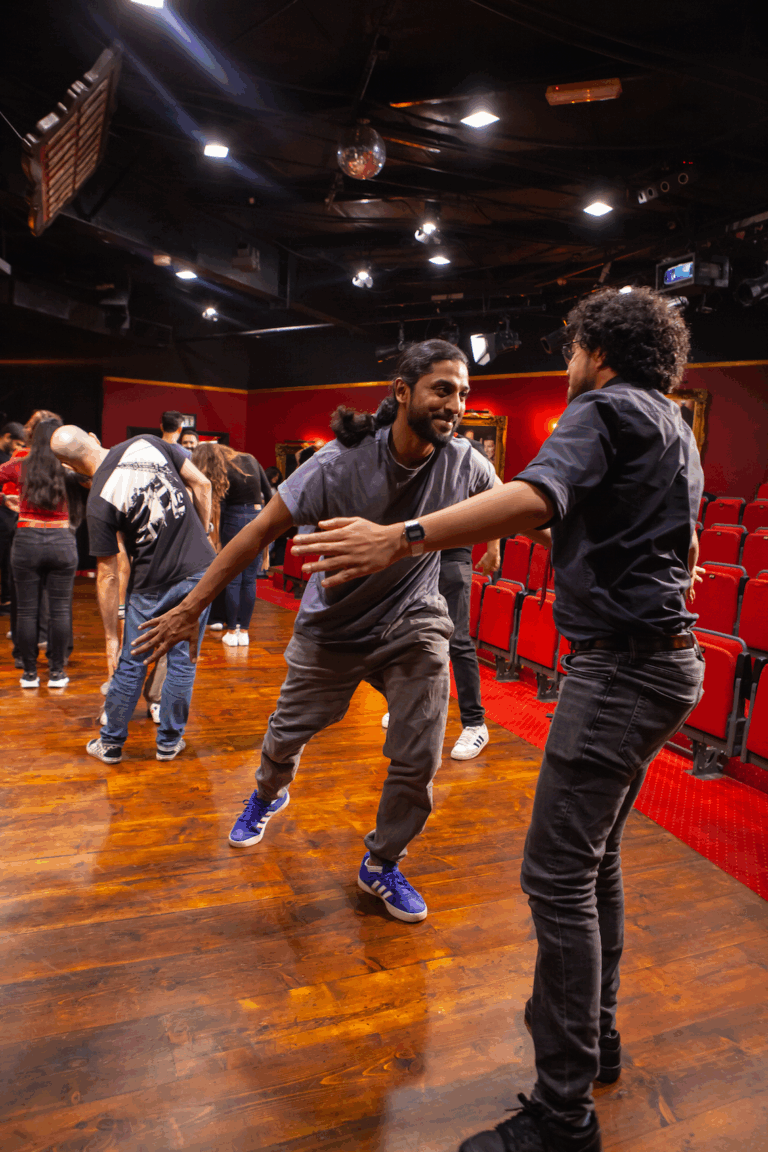
At the heart of Johnstone’s teaching is the principle that improvisation thrives on status awareness and support. The best improvisers are not those who dominate, but those who notice. Those who yield when needed. Those who say, “I’ve got you,” without words.
He taught that theatre should not be a stage for stars, but a space for ensemble. “Make your partner look good” is a foundational rule in his work—not because it’s polite, but because it’s effective. The more we lift one another, the better the work becomes. The better we become.

Practising the Unselfish Self
Improvisation is often misunderstood as an act of showing off. But to those who practise it with depth, it is clear: improv is a practice in being unselfish.
To play well, you must stop scripting outcomes. You must drop the desire to be funny, or to win, or to stand out. Instead, you must listen. Not to respond—but to understand. You must give space. Share control. Embrace uncertainty.
This is not just a technique. It is a discipline. A form of radical empathy.
Viola Spolin, whose improvisational games laid the groundwork for much of modern theatre training, believed that spontaneity could return us to a more honest state of being.
“Through spontaneity we are re-formed into ourselves… and are able to relate more directly to experience.”
– Viola Spolin, Improvisation for the Theater
That “direct relation” is what makes improv more than art. It becomes a kind of rehearsal for life—one in which cooperation replaces competition, where curiosity replaces control, and where the most valuable players are those who notice and respond rather than those who dominate.
A Model for a Different World
Patti Stiles, a contemporary master of improvisation and a direct student of Johnstone, describes improv as a practice of “generosity of spirit.” In her book Improvise Freely, she writes:
“Improvisation is the practice of living in the moment, listening with care, and responding with generosity. It’s a rehearsal for a better world.”
This reframing is essential. Improv is not only a craft—it is an ethical posture. It suggests a way of being that’s grounded in mutual support, responsiveness, and vulnerability. In a culture that increasingly rewards perfection, performance and personal gain, improv offers a path toward community, humility and growth.
And it all begins with a simple phrase: “Yes, and…”
These two words contain more than just agreement. They are an offering. They say: I hear you. I value your idea. Let’s build something together. In practice, they require us to let go of our need to be right, or first, or best. They teach us to be present with one another—not as competitors, but as co-creators.

From Ensemble to Everyday
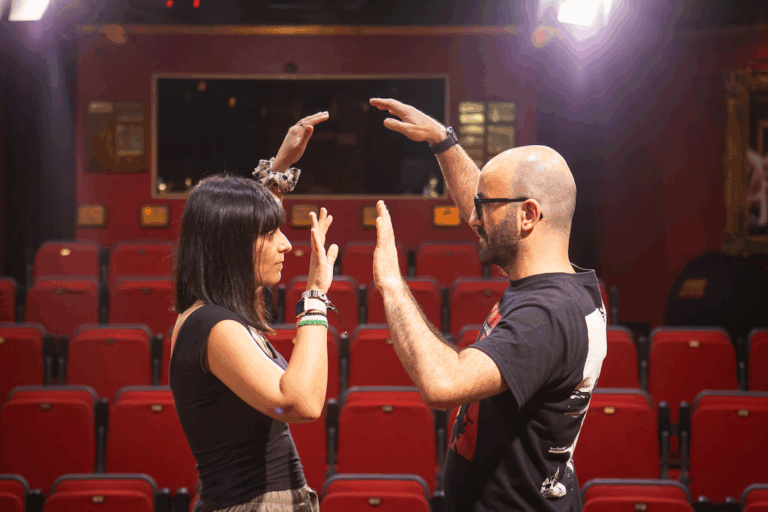
To practise improv well is to become more socially attuned. You learn to read the room. You notice when someone needs help. You start to value contribution over control, connection over correctness. And gradually, these lessons spill beyond the stage.
Improvisers carry these habits into their families, their workplaces, their communities. They become better listeners. More adaptable colleagues. Kinder humans.
Not because improv is magic. But because it trains the very qualities that our world so desperately needs: empathy, humility, attentiveness, and collaboration.

Not Performance—Presence
Perhaps the most powerful thing improv teaches us is that we don’t need to have all the answers. We just need to show up for each other. Fully, honestly, and without ego.
Improv won’t make you a hero. It won’t make you famous.
But it might make you a better teammate. A better listener. A kinder friend.
And in this moment—when the world feels increasingly fractured and loud—maybe that’s exactly what we need more of.
A little less main character.
A little more ensemble.
A little more kindness, built one scene at a time.