

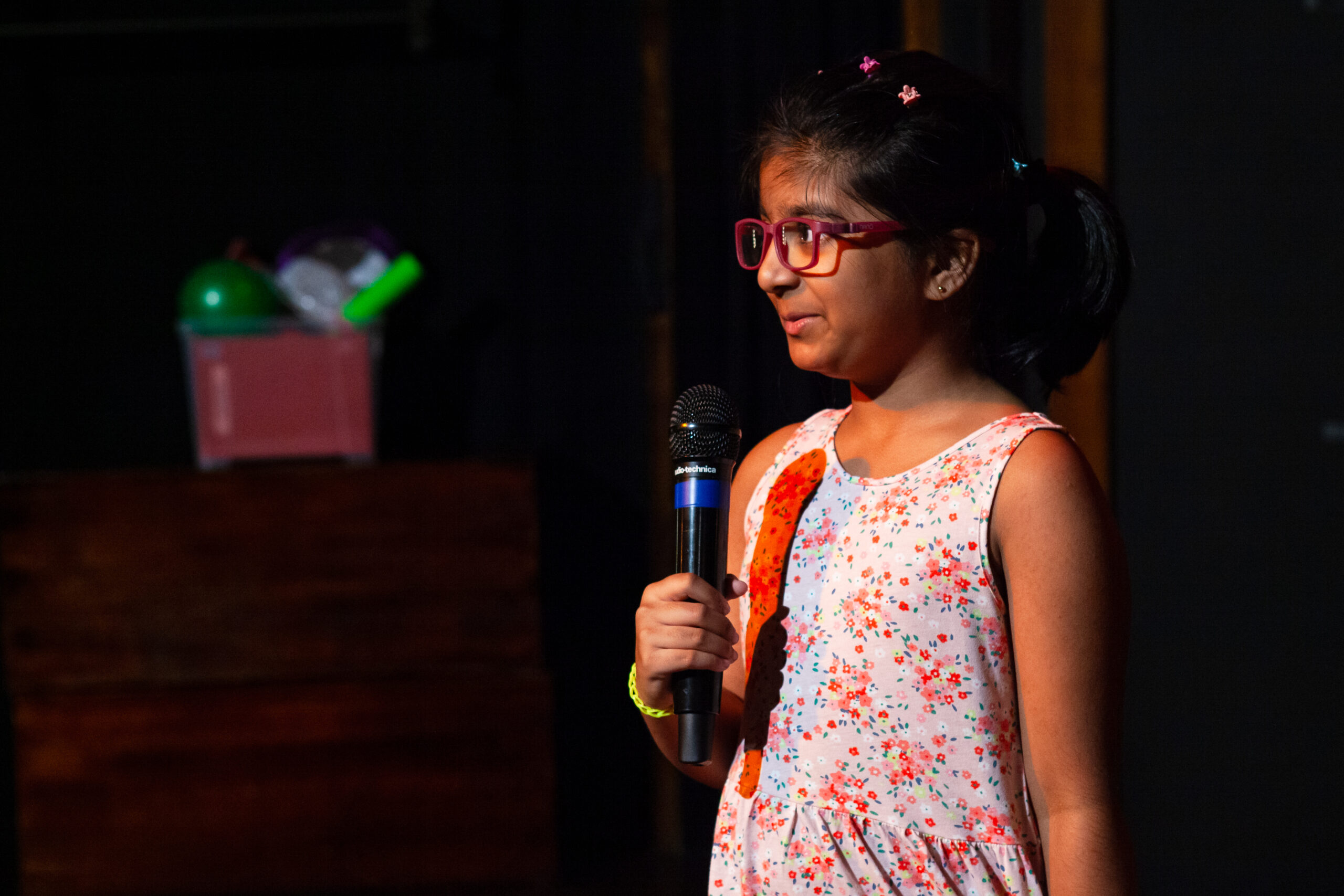
Because getting back up is where growth begins.
Courage in childhood is rarely loud. It does not announce itself as confidence or certainty. More often, it appears in moments of hesitation, when a child tries despite not knowing the outcome. Developmental psychology consistently shows that growth does not happen when children avoid discomfort, but when they learn to stay with it long enough to act.
In this sense, courage is not a personality trait. It is a behavioural choice, repeated over time.
Courage matters because it changes how children relate to challenge. When a child learns that discomfort is temporary and survivable, effort becomes safer. Instead of withdrawing at the first sign of difficulty, they remain engaged, experimenting, adjusting, and trying again. Over time, this builds resilience not as toughness, but as adaptability. As psychologist Carol Dweck explains:
“Why waste time proving over and over how great you are, when you could be getting better?” – Carol Dweck, Mindset: The New Psychology of Success (Random House, 2006)
Courage, in this sense, is what allows learning to continue when certainty disappears.
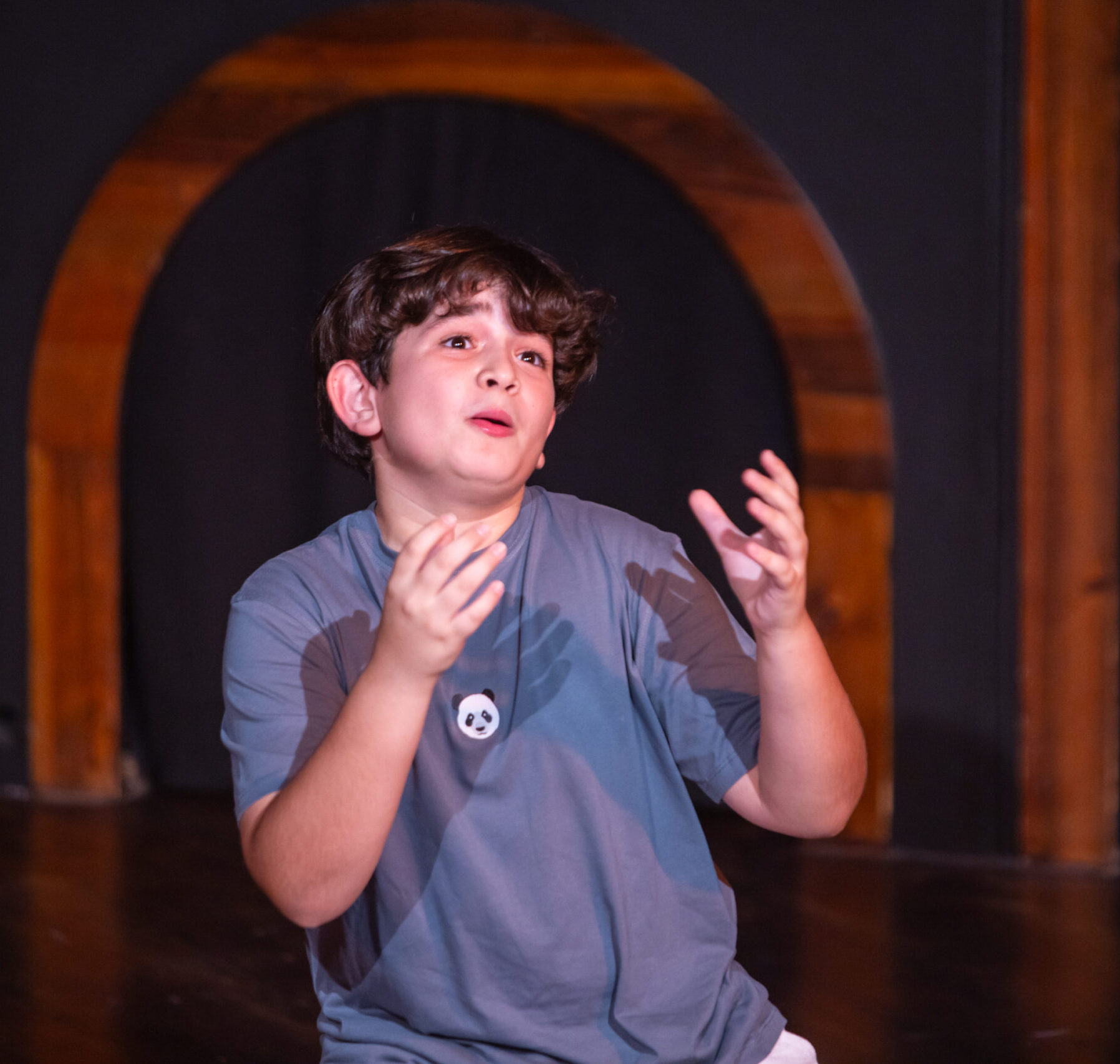
Courage as a Developmental Skill
Children are constantly navigating uncertainty: social dynamics, learning environments, performance, self-expression. What determines long-term resilience is not how often they succeed, but how they respond when things don’t go as planned. Research on child development and learning shows that children who are encouraged to try again after setbacks develop stronger emotional regulation and greater persistence.
Choosing courage, in this context, means participating even when success is not guaranteed. It means raising a hand without certainty, re-entering a scene after forgetting a line, or attempting something again after it didn’t work the first time.
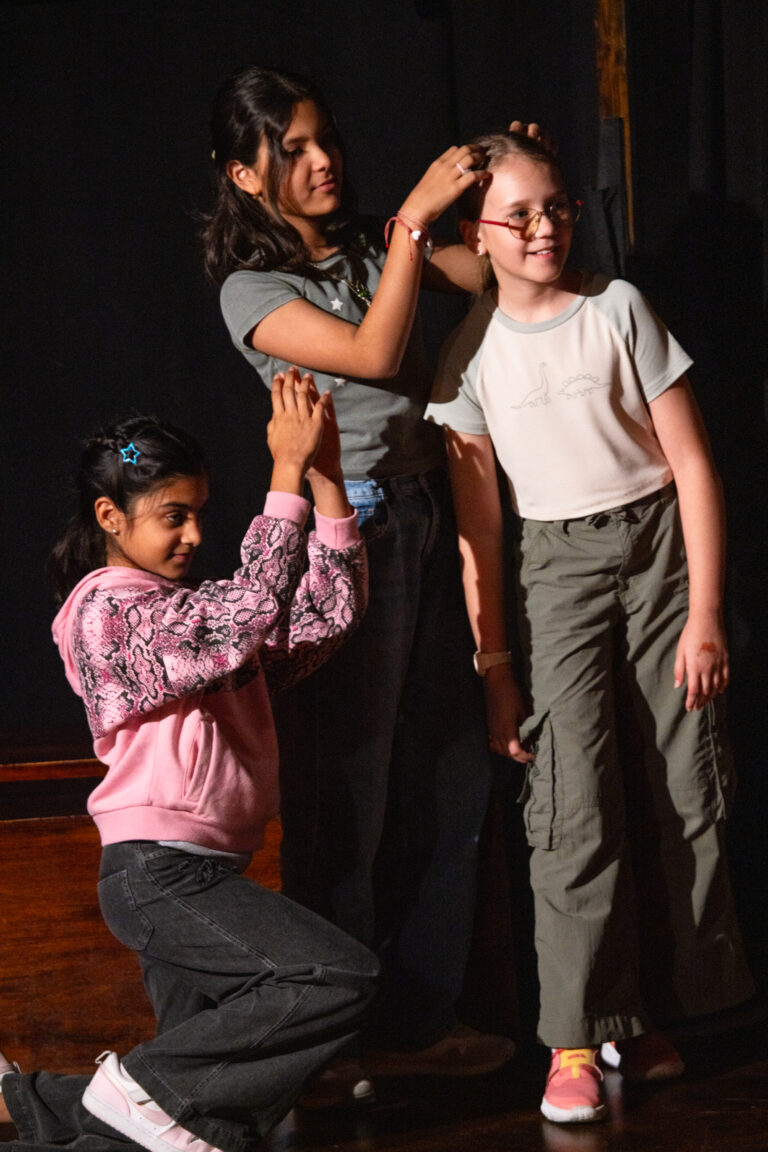
The role of Failure in Building Bravery
Failure often carries emotional weight for children because it is tied to identity: What does this say about me? Courage reframes that question. Instead of asking whether they are “good enough,” children learn to ask whether they are willing to try again.
Playwright and educator Samuel Beckett captured this process succinctly:
“Ever tried. Ever failed. No matter. Try again. Fail again. Fail better.” – Samuel Beckett, Worstward Ho (1983)
This idea is not about glorifying failure, but about normalising recovery. When children experience failure within a supportive structure, they learn that difficulty is part of learning, not a signal to stop.
This is also where the role of the teacher becomes critical. For recovery to be possible, failure must be met with guidance rather than judgment. When adults know how to respond to mistakes, by framing them as information, offering structure, and maintaining emotional safety, children learn that setbacks are manageable.
Courage and Confidence Are Not the Same
Confidence is often mistaken for courage, but the two function differently. Confidence tends to follow success; courage precedes it. A child does not become courageous because they feel ready, they feel ready because they acted despite uncertainty.
As researcher Brené Brown notes:
“Courage starts with showing up and letting ourselves be seen.” – Brené Brown, Daring Greatly: How the Courage to Be Vulnerable Transforms the Way We Live, Love, Parent, and Lead (Gotham Books, 2012)
For children, “being seen” can mean speaking, performing, attempting, or simply staying present when something feels uncomfortable. Over time, these moments accumulate. They shape how a child understands challenge, not as a threat, but as a space where growth happens.
Why Choosing Courage Matters
When children learn that getting back up is not a sign of weakness but of strength, their relationship to challenge changes. They take risks more freely. They recover more quickly. They begin to trust their ability to navigate uncertainty.
This is how bravery is built, not by removing difficulty, but by helping children move through it. Courage becomes less about fearlessness and more about participation. And participation, repeated often enough, becomes confidence.
Because growth doesn’t begin when everything feels easy.
It begins when a child decides to try again.

How Improv Builds Courage
Improvisation is particularly effective in cultivating courage because it removes the illusion of a “correct” answer. Children are invited to respond rather than prepare, to participate rather than perfect. Mistakes are not interruptions to the process; they are the process. By repeatedly entering situations without a script, children practice acting in uncertainty, learning that they can cope, adapt, and continue even when they don’t know what comes next. Courage, in this context, is not about performance, but about staying present when control is limited.
As improvisation teacher Keith Johnstone observed:
“If you’re not failing, you’re not really improvising.” – Keith Johnstone, Impro: Improvisation and the Theatre (Methuen Drama, 1979)
His work consistently points to the same idea: courage grows not from avoiding mistakes, but from learning that making them is safe.

Beyond the Stage: Skills That Last
Over time, this kind of practice supports the development of abilities that extend far beyond the stage. Children who learn to choose courage often develop stronger emotional regulation, clearer communication, and greater social awareness.
They become more comfortable taking initiative, collaborating with others, and recovering from setbacks. Attention improves because participation is required. Empathy grows because listening becomes necessary.
Confidence emerges not as bravado, but as trust in one’s ability to try again. These are not theatrical skills alone, they are life skills, formed through repeated moments of courage, choice, and continued effort.
As philosopher and educator John Dewey argued:
“Education is not preparation for life; education is life itself.” — John Dewey, Experience and Education (1938)
The skills formed through repeated moments of courage, choice, and effort do not remain confined to the rehearsal room, they become part of how children engage with the world.