


Self-trust is the first secret of success. – Ralph Waldo Emerson.
One of the most commonly cited fears for a great deal of adults is the fear of public speaking. It is the cold dread of standing up in front of an audience with faces looking up expectantly that is one of the primary inducements of nightmares. Similarly, many adults are crippled by social anxiety that sees them holding back their thoughts or opinions for fear of being judged or sounding stupid. It is an acute fear of failure which inhibits risk-taking and prevents adults from trying new things, speaking up or trusting their instincts. Most adults know that this approach rarely leads to fulfilment or achievement in life or work. Many long for the confidence which is well known to be the game-changer that gives highly successful people the edge in personal life and in work.
In adulthood people seek out drama classes or life coaching sessions to help them to find that inner self-belief. But what if this could have been found earlier, what if as children, people could be given a head start in life by equipping them with the tools to deal with their emotions, understand others, and have a strong core self-belief – through laughter, play, and storytelling? Skills that would ensure they don’t grow up with the doubts and fear of failure that hold back many in their 30’s and 40’s and which they have to learn to overcome.

Confidence Through Building Emotional Intelligence
The theatre offers a safe and supportive space for kids to develop these essential life skills. Whether they’re 4 or 14, every rehearsal and game in class nudges them gently outside their comfort zone. A growing body of research shows that theatre-based education helps children build self-esteem, social confidence, and emotional intelligence (americanspcc.org). Emotional intelligence is key to confidence in adulthood, because if you can understand your emotions, you can more easily step outside of their overwhelming influence in the moment, and free yourself from the clutches of fear and doubt. No amount of training will remove fear, even experienced actors feel nerves, the key is in understanding that we don’t need to be slaves to our feelings which evolved to keep us safe. When we can rationalise that an audience is not actually threatening us, we know that the fear is irrational and we can move past it.
Emotional intelligence developed through drama classes also help us to understand that others are also going through the same thought processes and emotions as we are, they are not actually judging us as we assume they are. People watching a performer on stage, even a novice, are in the majority case most likely imagining themselves in that position and are impressed by the performers bravery, even envious.
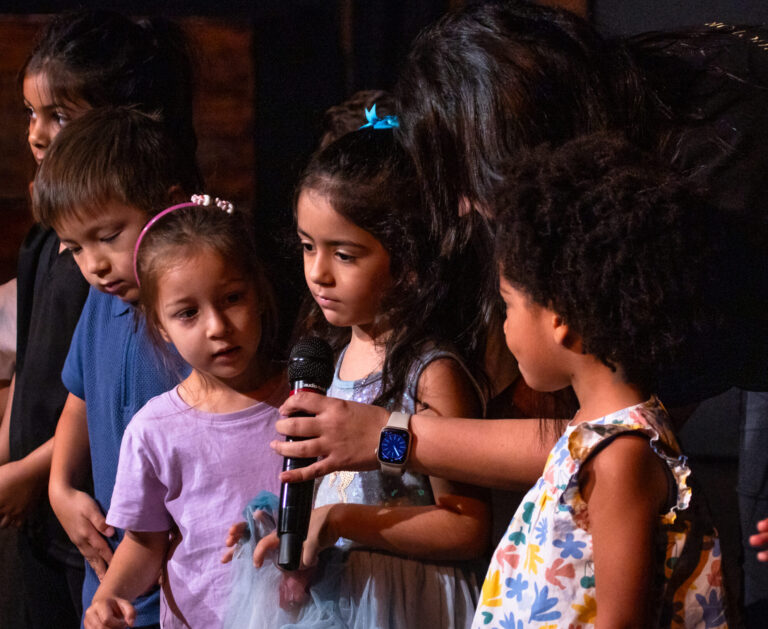
Supporting Shy Kids and Tackling Social Anxiety
Theatre is uniquely powerful for children who struggle with social anxiety or find group settings overwhelming. Unlike sports or traditional academics, there’s no pressure to be “the best” in our classes. Instead, we focus on inclusion, encouragement, and playful risk-taking.
Studies from the University of Michigan and others have found that theatre—particularly improv—helps reduce symptoms of social anxiety and increases children’s willingness to speak, collaborate, and be seen (detroit.umich.edu). By stepping into different roles and scenarios, kids gain perspective, practice empathy, and learn to navigate social settings with growing ease.
This opening up results from the theatre creating a space where children feel they are accepted and they trust their ideas will be heard and they can be fully themselves.
Embracing Uncertainty Through Improv
In improv, the unexpected isn’t a problem—it’s a gift.
Each class encourages kids to say “yes, and…” to ideas, build stories together, and learn how to move forward when things don’t go to plan. These skills translate beautifully into real life—where curveballs and surprises are part of the game.
Psychologists call this psychological flexibility, and it’s one of the most important predictors of long-term wellbeing. Kids who practise improv regularly are more likely to tolerate uncertainty and manage anxiety in everyday situations (psychologytoday.com).
The repetition of rehearsals, the joy of storytelling, and the celebration of each small success create a steady path towards inner confidence—on stage and in everyday life. Every idea is valued and accepted in an improv exercise, so children learn from an early age that their ideas matter and can be used to build amazing creative collaborations. They start to trust their first impulse and realise that everyone there will support them, and the censor in their head telling them that their ideas don’t matter starts to fade and they start to believe in themselves.
Brave Kids Become Bold Adults
Imagine a generation of adults who aren’t paralysed by stage fright, who collaborate confidently, and who welcome challenges instead of avoiding them. That’s what theatre makes possible.
When kids learn:
It’s okay to be seen and heard
It’s safe to make mistakes
Their voice matters
…they carry that courage into classrooms, friendships, job interviews, relationships—and beyond.

At the Courtyard Playhouse We’re not preparing kids for Broadway—we’re preparing them for life.
In summary, theatre-based learning strengthens a wide range of skills which can set them up for success as adults, including:
| Life Skill | How Theatre Helps |
|---|---|
| Speak Up | Voice projection, eye contact, confidence |
| Bounce Back | Embracing mistakes and trying again |
| Handle Pressure | Performing calmly under observation |
| Think on Your Feet | Responding creatively to the unexpected |
| Work With Others | Ensemble-based storytelling & empathy |
| Connect Socially | Building trust and confidence in groups |