

How improv gives you the resilience to handle the unexpected
“The only way to make sense out of change is to plunge into it, move with it, and join the dance.” – Alan Watts
The last few years have rewired how people move through the world. We’ve lived under a rolling sense of threat — a pandemic, economic shocks, geopolitical friction, climate instability, and now an era where countries are invading each other, genocides are live-streamed to our devices and the once-seemingly-stable world-order and rule of law seems to be slipping away. AI and automation are dramatically reshaping everyday life and threaten human creativity and job security. Counselling psychologist Niamh Delmar notes that prolonged exposure to fear and uncertainty leaves populations in a “heightened state of alertness.” People consume frightening news cycles, absorb stories of crisis, and end up carrying stress as a constant companion rather than an occasional visitor.
This isn’t weakness; it’s biology. Humans are built to crave stability because it signals safety. When the world becomes unpredictable, the amygdala — the brain’s threat detector — kicks in. Forbes recently described this as a “mental tug-of-war”: the fight-or-flight response floods the body with cortisol and adrenaline, narrowing focus, sharpening anxiety and disrupting sleep. Even positive changes require the brain to adjust to the unfamiliar, which is why uncertainty — whether exciting or frightening — feels so uncomfortable.
Research from the American Psychological Association shows that chronic uncertainty overloads the mind with unresolved “what-ifs.” People start rehearsing disasters that haven’t happened. Mental energy gets swallowed by possible futures instead of present reality. Decision-making stalls. Even less-than-ideal routines start to look appealing because at least they’re familiar.
This is the psychological context adults are living in as they try to manage families, work, relationships, and ambitions. The world outside keeps shifting; the internal pressure builds. And while we can’t eliminate uncertainty, we can change how we respond to it.
This is where improv becomes unexpectedly powerful.
Improv is often seen as something for performers, but its deeper value lies elsewhere. It’s a practical training ground for adaptability — a way to rehearse the mindset needed to navigate a world that refuses to behave predictably. Leadership writer Mary Jo Asmus puts it plainly: adaptability is the ability to stay effective when conditions change, not by clinging to the original plan but by adjusting with awareness and intention. Improv is that principle in motion.
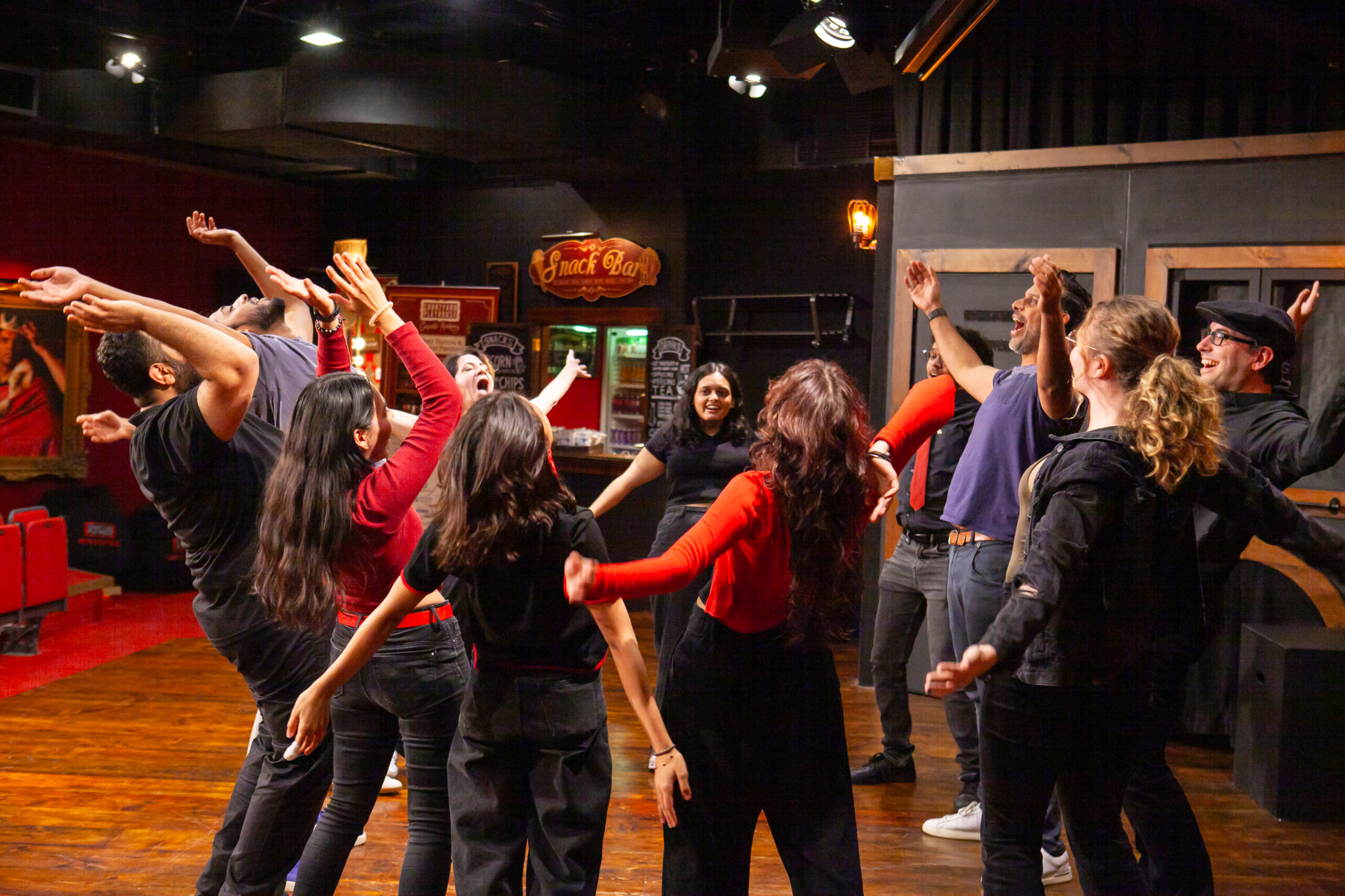
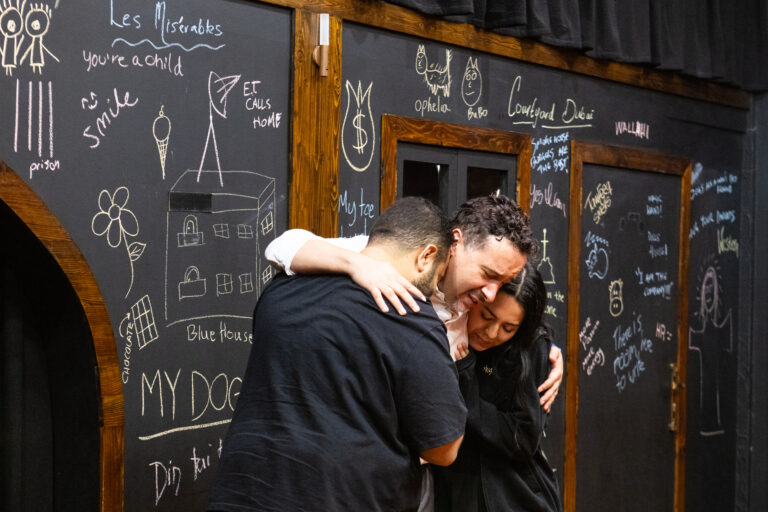
On stage — or simply in a circle with other adults — you practise responding to the present moment rather than the fantasy of how things “should” go. You learn to listen before reacting. You become more attuned to others, noticing shifts rather than bulldozing ahead. And when a scene derails (as they often do), you practise pivoting rather than panicking. It’s a rehearsal room for staying functional under surprise.
Crucially, improv makes these skills physical. This matters because cognitive understanding doesn’t automatically translate into behavioural change. You can read every article about uncertainty, resilience and growth mindsets, but your nervous system only learns not to panic by actually experiencing the unexpected in a safe environment. Improv gives you repeated, low-stakes exposure to uncertainty: surprises, mistakes, awkwardness, and the unknown. Each time you stay calm, or recover quickly, your brain updates its internal map. What once felt threatening becomes familiar.
That’s the quiet magic of it. The more you practise handling the unexpected, the less intimidating the unexpected becomes. The “fight-or-flight” reaction softens. Your decision-making loosens. You think more clearly. You stay connected to other people rather than shutting down. You discover that a misstep isn’t the end of the moment — it’s simply the beginning of the next one.
This is resilience in its most human form: not brute toughness, but flexible steadiness. The ability to keep moving — thoughtfully, creatively, collaboratively — even when the path shifts beneath you.
Adults come to improv for all sorts of reasons: confidence, connection, curiosity, a break from the grind. But one of its greatest strengths is that it trains the exact qualities modern life demands. It helps you build a mindset that bends without breaking. It teaches you to trust your ability to adapt. And it reminds you, again and again, that you don’t need perfect conditions or perfect plans to show up fully.
The world isn’t going to hand out scripts any time soon. But if you can learn to navigate uncertainty with others — laughing, stumbling, trying again — you’ll find that real life becomes a little less daunting, and a lot more manageable.

That’s the value of improv in 2026. Not as a performance skill, but as a resilience lab for ordinary adults finding their way through an unpredictable world.